New Haven, Connecticut (203) 467-7000 info@adeleoinc.com
Union Affiliated Think Smart, Think Safety

Project Experience

Underground electrical infrastructure and civil construction executed inside active utility environments for United Illuminating, Eversource Energy, Gulf Oil, and Buckeye Partners across CT, NY, NJ, MA, and RI.

What the Record Shows

IOU Framework Contracts and Energy Sector Civil — Active Environments, No Downtime

DeLeo has executed underground electrical and civil construction for investor-owned utilities and energy facility operators under multi-year framework contracts and MSAs. The case studies below describe what was built, where it was built, and the constraints — live systems, protection protocols, energized-adjacent work, active facility operations — that shaped how the work was sequenced and delivered. Repeat awards from UI and Eversource reflect consistent execution against IOU performance standards across contract cycles, not single project completions.

United Illuminating 5-Year Framework Contract
Underground Electric · Framework Contract

United Illuminating — 5-Year Underground Electric Framework Contract

Connecticut — Statewide 2024–2029 United Illuminating (Avangrid)
Scope Statewide underground electric distribution work across UI's Connecticut service territory — ductbank installation, conduit systems, vault and manhole construction, cable pathway construction, and pavement restoration following utility installation. Scope is assigned under a multi-year framework structure; DeLeo is one of the contracted execution parties for underground distribution construction and maintenance.
Environment Active urban and suburban distribution corridors throughout Connecticut. Work is performed adjacent to energized cable systems, in live roadways, and at substation perimeters. Many installations occur within tight right-of-way in dense urban areas requiring coordination with municipal permitting and traffic management.
Constraints Energized cable in adjacent conduit throughout most work zones. Live roadway traffic requiring traffic control and lane restrictions. Municipal permit coordination in multiple jurisdictions. Outage window sequencing coordinated with UI dispatch to minimize customer impact during system transitions.
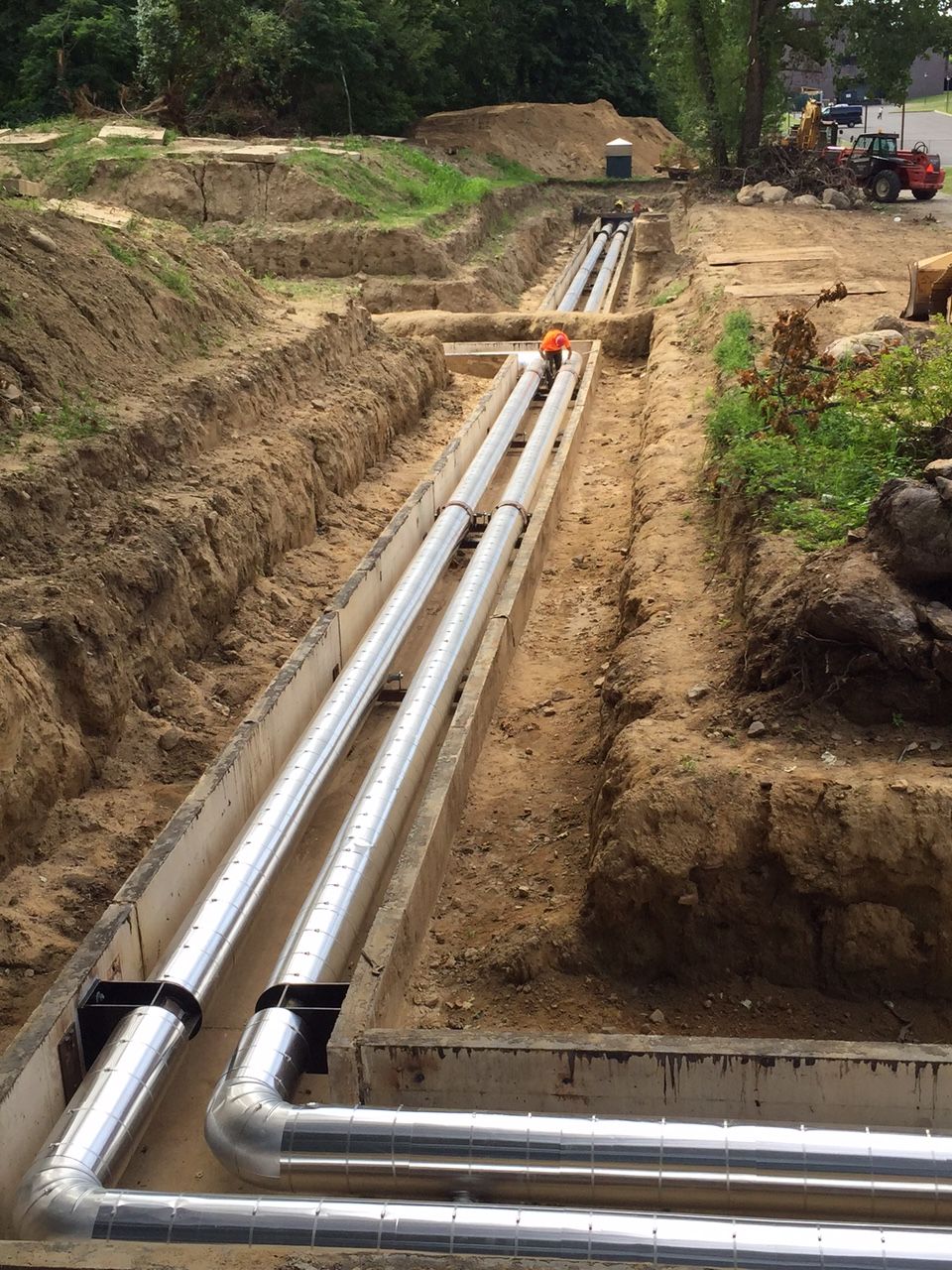
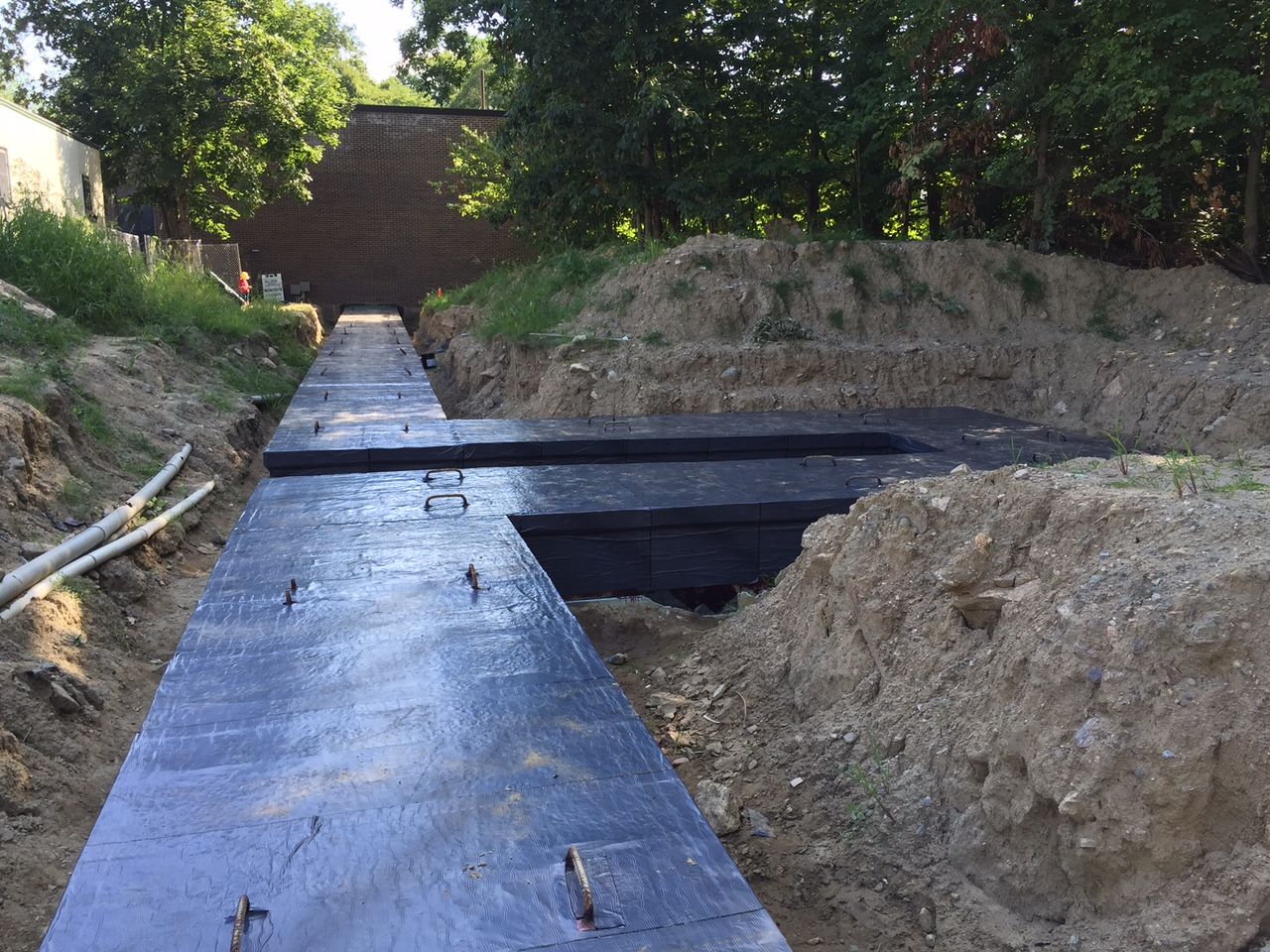
Execution Phased ductbank installation within active corridors. Concrete-encased multi-run conduit placement executed to UI specifications. Vault and manhole installation with full conduit entry integration. Pavement restoration to municipal and DOT requirements upon completion of each installation segment.
Framework Contract Concrete-Encased Ductbank Vault & Manhole Installation Conduit Systems 5-Year Term
Eversource Energy Underground Utility Program
Underground Electric · Multi-State

Eversource Energy — Underground Electric Distribution Infrastructure

Connecticut, Massachusetts, Rhode Island Eversource Energy
Scope Underground electric utility construction for Eversource Energy across three states — trench excavation, conduit installation, concrete-encased ductbank placement, splice vault and manhole construction, and surface restoration. Work includes both new system installation and replacement of aging underground infrastructure as part of Eversource's grid reliability programs.
Environment Urban and suburban distribution corridors across CT, MA, and RI. Varied soil and subsurface conditions. Active roadway environments with traffic management requirements. Work performed within Eversource's active distribution network — parallel cable systems energized throughout construction.
Constraints Multi-state regulatory environments. Energized-adjacent work throughout. Active utility corridor congestion with multiple existing utilities requiring careful excavation around live infrastructure. Cable installation sequencing coordinated with Eversource engineering to maintain circuit continuity.
Execution Excavation, ductbank placement, and backfill per Eversource specifications. Vault and manhole installation with conduit entry integration. Dewatering as required by subsurface conditions. Pavement restoration to state DOT standards following each installation phase.
Underground Electric Grid Infrastructure Ductbank Systems CT · MA · RI Multi-Year Program
Substation Civil and System Integration
Substation Civil · System Integration

Substation Conduit Entry & Ductbank Tie-In — Active Electrical Environments

Connecticut Investor-Owned Utility Clients
Scope Civil work at substation perimeters — conduit entry into station structures, ductbank tie-ins at system termination points, and trench construction within active station yards. Scope includes excavation within the station boundary, conduit installation from the ductbank run to the station entry point, and all associated civil restoration.
Environment Active electrical substations with energized transmission and distribution equipment. Restricted-access sites with security, access, and PPE requirements established by the utility. Work executed within minimum-approach distances of energized switchgear, transformers, and bus structures.
Constraints Site access controlled by utility. Equipment restrictions within energized zones — specific excavation equipment types and heights approved by the protection engineer before site entry. Work sequencing coordinated with station operations to avoid interference with switching activities or protection zones.
Execution Pre-construction coordination with utility protection engineers to establish protection plan, equipment approval, and access protocol. Conduit entry and ductbank tie-in executed within approved zones under continuous safety supervision. Restoration of substation yard surfaces to utility specifications upon completion.
Substation Civil Conduit Entry Ductbank Tie-In Active Station Environment Protection Coordination
Energy Facility Civil Construction
Heavy Civil · Energy Facilities

Energy Facility Site Development — Substations, Fuel Terminals & Industrial Sites

Connecticut & New England Energy & Industrial Facility Owners
Scope Full civil scope for energy facility development — site preparation, earthwork, structural concrete for equipment pads and transformer foundations, underground utility installation within the facility boundary, access road and yard paving construction, storm drainage systems, oil-water separators, secondary containment civil scope, and vapor recovery infrastructure. Scope is defined by engineering documents with specific tolerances for pad elevation, drainage slope, and underground utility routing.
Environment Fuel terminals, substation sites, and industrial processing facilities across Connecticut and the broader New England region. Sites often have active operations in adjacent areas during construction, requiring controlled access, dust suppression, and coordination with facility operations management.
Constraints Structural concrete tolerances for equipment foundations are tighter than standard civil work — pad elevation and levelness affect equipment installation and long-term performance. Underground utility routing must be coordinated with equipment layouts and access requirements defined in the facility design. Active adjacent operations restrict phasing and mobilization.
Execution Site preparation and grading per survey and engineering control. Structural concrete placed in coordinated pours — forming, reinforcement placement, pour scheduling, and finishing to spec tolerances. Underground utility installation sequenced with above-ground facility construction. Storm drainage and secondary containment systems installed and tested prior to facility startup.
Substation Civil Fuel Terminal Construction Structural Concrete Equipment Pad Foundations Oil-Water Separators Vapor Recovery Infrastructure
Storm Sewer and Utility Infrastructure
Storm & Sewer · Site Infrastructure

Storm, Sewer & Utility Infrastructure — Site Development & Energy Projects

Connecticut & New England Energy, Site Development & Civil Clients
Scope Installation of storm drainage systems, sewer infrastructure, and underground utility components as integrated scope within site development, utility, and energy-sector projects. Work includes trench excavation in all soil conditions, pipe installation at specified grade and alignment, structure placement and adjustment, manhole and catch basin setting, connection to existing drainage systems, and surface restoration.
Environment Site development projects, energy facility construction sites, and urban utility project corridors across Connecticut and New England. This scope is typically integrated with broader underground electrical or civil project work — not executed as standalone municipal programs.
Constraints Subsurface conditions across New England range from ledge rock to saturated fill, requiring field-adaptive installation methods. Pipe grade and alignment must be maintained through varying soil conditions. Connections to existing systems require bypass pumping when live flows are present.
Execution Trench excavation to design depth, shoring as required by soil conditions, pipe bedding preparation, pipe installation to grade, structure setting, grouting and adjustment of frames/covers to finish grade, connection to existing systems, and backfill and compaction to specification.
Storm Drainage Sewer Infrastructure Pipe Installation Structure Placement Pavement Restoration
Energy Sector Heavy Site Development
Heavy Civil · Site Development

Heavy Site Development — Energy Sector & Commercial Projects

CT, NY, NJ, MA, RI Energy & Commercial Clients
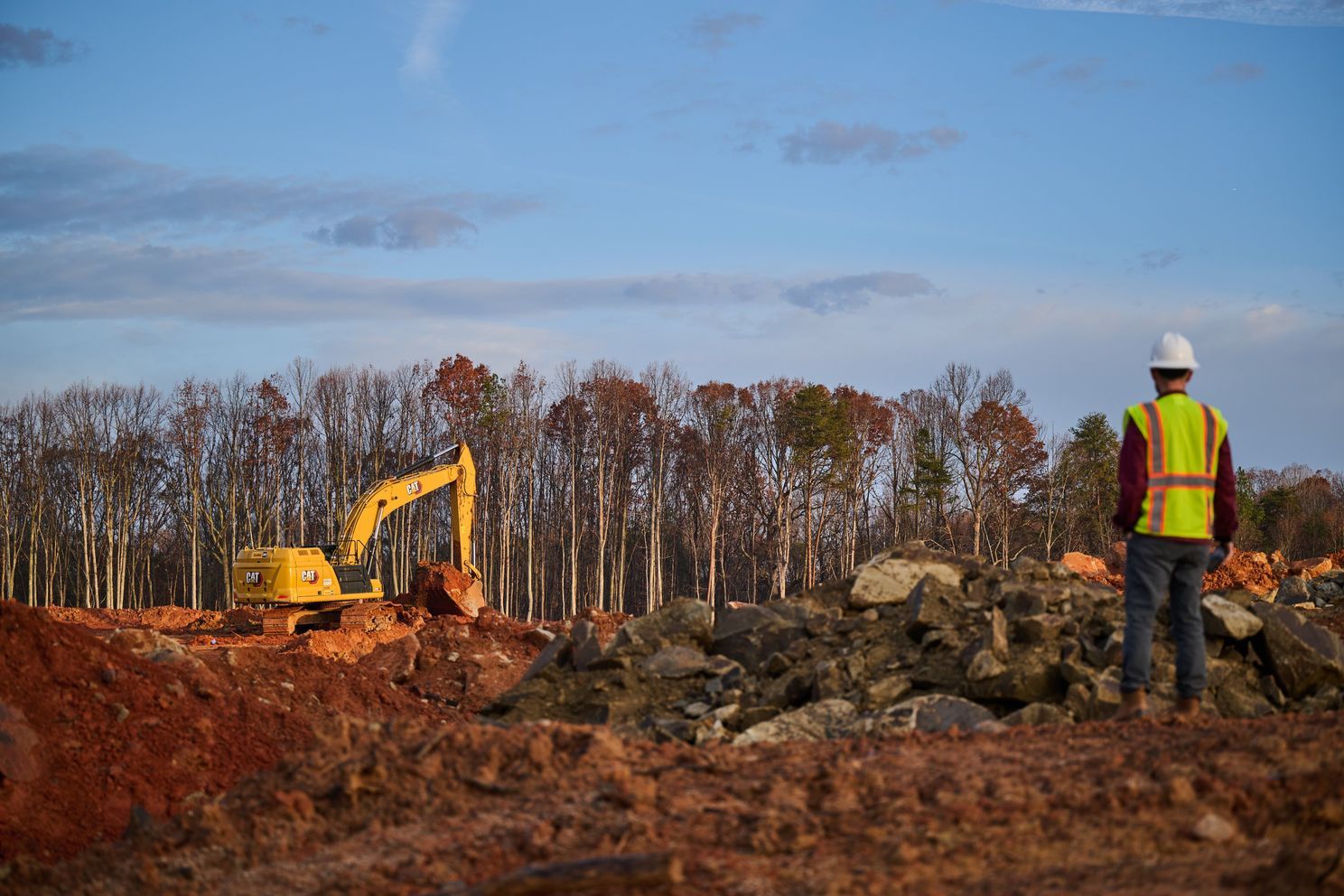
Scope Full-scope heavy civil site development — land clearing, mass grading, earthwork, and site preparation for energy-sector and commercial clients. Includes access road construction, erosion and sedimentation control systems, subgrade preparation, and site drainage integration. Scope is coordinated with utility and facility construction phases occurring concurrently on the same site.
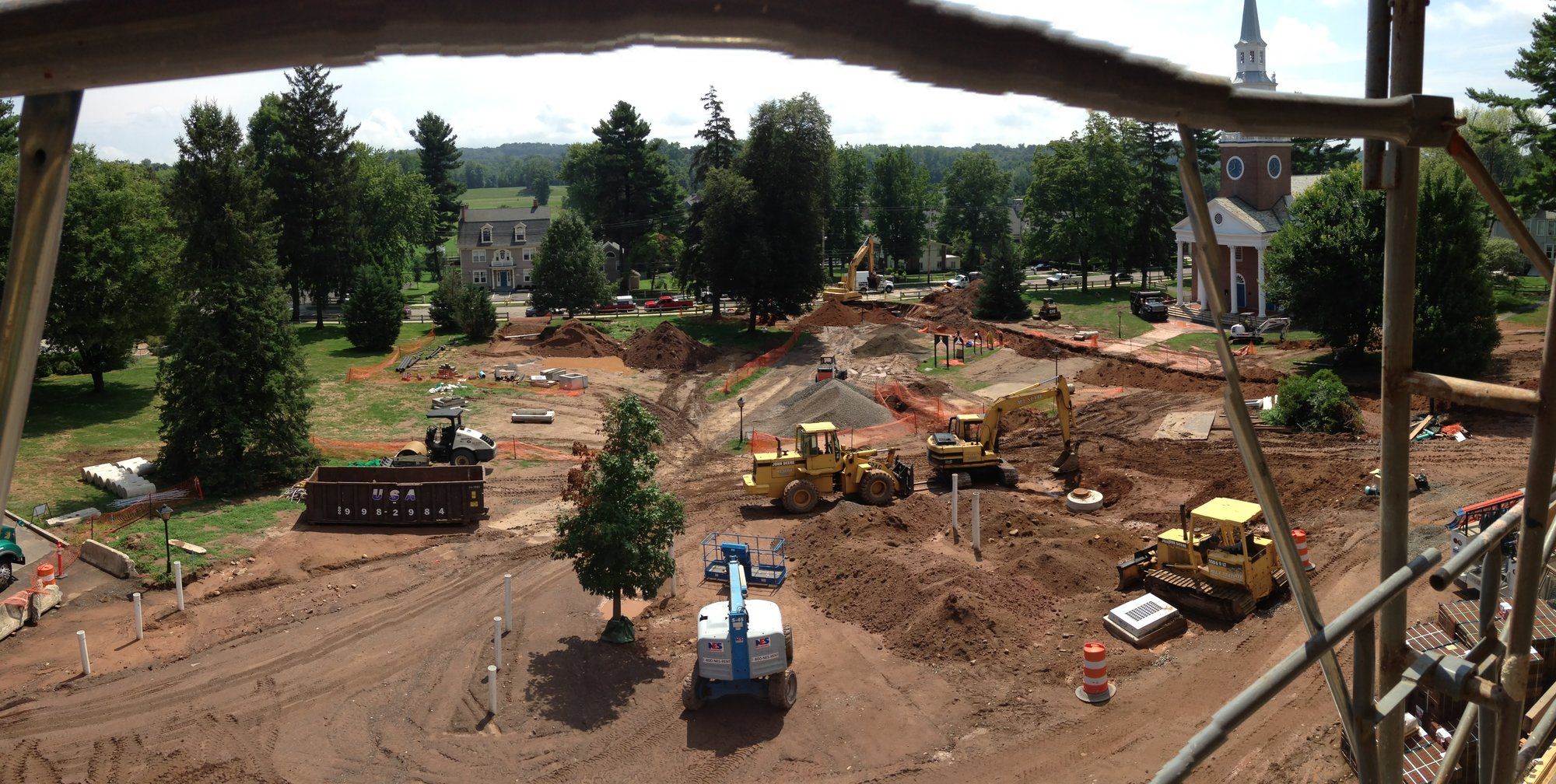
Environment Varied terrain across the Northeast — wooded sites requiring clearing and grubbing, existing improved sites requiring demolition and regrading, urban infill sites with tight access and active adjacent development. Energy-sector sites often require integration with underground electrical installation activities occurring on the same schedule.
Constraints Erosion and sedimentation control requirements on disturbed sites adjacent to sensitive areas. Dewatering requirements in areas with high groundwater. Integration with concurrent underground utility and structural concrete scopes — phasing must maintain access for multiple crews and trade coordination.
Execution Clearing and grubbing to limits-of-disturbance. Mass grading and cut/fill operations to design grades. E&S controls installed prior to disturbance and maintained throughout. Subgrade preparation and access road construction integrated with facility development schedule. Final grading and site cleanup upon completion of all underground work.
Mass Grading Land Clearing Earthwork Access Roads Erosion Control
Emergency Underground Utility Response
Emergency Response · Underground Electric

24/7 Emergency Response — Underground Electrical Infrastructure

Connecticut & New England 24/7 On-Call Contracted Utility Clients
Scope Rapid-response excavation, assessment, and restoration for underground electrical infrastructure failures. Scope includes emergency trench excavation to expose failed cable systems, damage assessment coordination with utility engineering, temporary routing installation where required to restore system continuity, and permanent restoration of underground infrastructure and pavement following repair.
Environment Active roadways and urban corridors with live traffic. Disturbed, water-infiltrated trench conditions following storm events. Energized cable in adjacent conduit throughout the work zone. Night-shift and off-hours work in all weather conditions to minimize restoration time.
Constraints Time pressure exists but does not override safety controls. Utility locates must be completed before excavation — even under emergency conditions. Protection coordination with the utility's switching and dispatch must occur before energized-adjacent work begins. Proper shoring must be installed before crew entry into any trench, regardless of urgency.
Execution On-call crew mobilized to site within response window. Utility locates coordinated and cleared. Trench excavation with concurrent protection plan established with utility dispatch. Damage assessment with utility engineering. Emergency restoration or temporary routing installed to restore service continuity. Permanent restoration completed on expedited schedule following utility repair.
24/7 Response Emergency Excavation Underground Electric Restoration Storm Damage Rapid Mobilization
Roadway and Site Restoration
Site Restoration · Post-Utility

Roadway & Site Restoration — Post-Utility Installation

New Haven Metro Area & Statewide CT CT DOT, Municipalities & Utility Clients
Scope Full pavement and surface restoration following underground utility installation — base course repair, concrete patching, milling, and pavement overlay to restore roadways to pre-construction condition or better. Includes concrete curb and sidewalk reconstruction, pavement marking restoration, and final inspection support for municipal acceptance. Restoration is coordinated with utility client requirements and municipal DOT standards.
Environment Urban and suburban roadways throughout Connecticut — from dense New Haven city streets to suburban collector roads. Restoration must match existing pavement types and surfaces: asphalt, concrete, granite curbing, brick, and stone — materials common in Connecticut's older urban environments. Live traffic adjacent to restoration operations throughout.
Constraints Municipal inspection requirements vary by jurisdiction. CT DOT roads have specific requirements for pavement thickness, material specification, and final survey confirmation. Trench settlement must be accounted for in permanent restoration scheduling — temporary patching must hold traffic until final restoration is authorized by the utility client and municipal authority.
Execution Trench subbase and base course installed and compacted to specification. Pavement saw-cut and milled to produce clean restoration edges. Asphalt or concrete placed to match existing surface type and thickness. Curb and sidewalk reconstruction where impacted. Final survey and municipal inspection coordination to close permits.
Pavement Restoration Base Course Repair Concrete & Curbing CT DOT Compliant Municipal Inspection
Client Relationships

Client Relationships

Investor-owned utilities, energy distributors, and fuel terminal operators — clients with active, regulated operations and high performance expectations for contractors who work inside them.

United Illuminating (Avangrid)

5-Year Underground Electric Framework Contract (2024–2029) · Statewide CT Underground Distribution

Eversource Energy

Underground Electric Infrastructure · Grid Reliability Programs · CT, MA, RI

Gulf Oil

Fuel Terminal Civil · Tank Farm Foundations, Secondary Containment, Oil-Water Separators, Vapor Recovery Infrastructure

Buckeye Partners

Midstream & Pipeline Site Civil · Access Roads, Underground Utility, Environmental Compliance Civil · Northeast

Discuss Your Project

Discuss Your Project

If you are planning underground electrical work, substation civil scope, energy facility construction, or utility infrastructure in the Northeast — contact DeLeo to discuss scope and fit. We respond within one business day and review projects practically.

DeLeo underground utility crew