New Haven, Connecticut (203) 467-7000 info@adeleoinc.com
Union Affiliated Think Smart, Think Safety

Underground Electrical & Civil Infrastructure for the Energy Sector

Trusted by United Illuminating (Avangrid) and Eversource Energy to execute in live utility environments — ductbank systems, utility structures, substation civil, and heavy civil for energy facilities across CT, NY, NJ, MA, and RI.

Who Contracts DeLeo

Contracted by IOUs to Execute in Live Utility Environments

DeLeo holds a 5-year underground-utility framework contract (2024–2029) with United Illuminating (Avangrid) and has performed underground electric utility construction for Eversource Energy across Connecticut, Massachusetts, and Rhode Island. These are performance-based contracts. The IOU awards them to contractors who can execute ductbank systems, vault and manhole construction, and substation civil work inside active utility corridors and energized station yards — without forcing system outages and without safety compromises.

DeLeo self-performs the civil and underground electrical scopes under one coordinated operation. The workforce is LIUNA-affiliated, trained in confined-space entry, lockout/tagout, and the protection protocols required when working adjacent to energized distribution infrastructure. Field supervision coordinates with utility construction managers on sequencing, outage windows, and protection plans before work begins in any restricted zone.

Discuss Your Scope
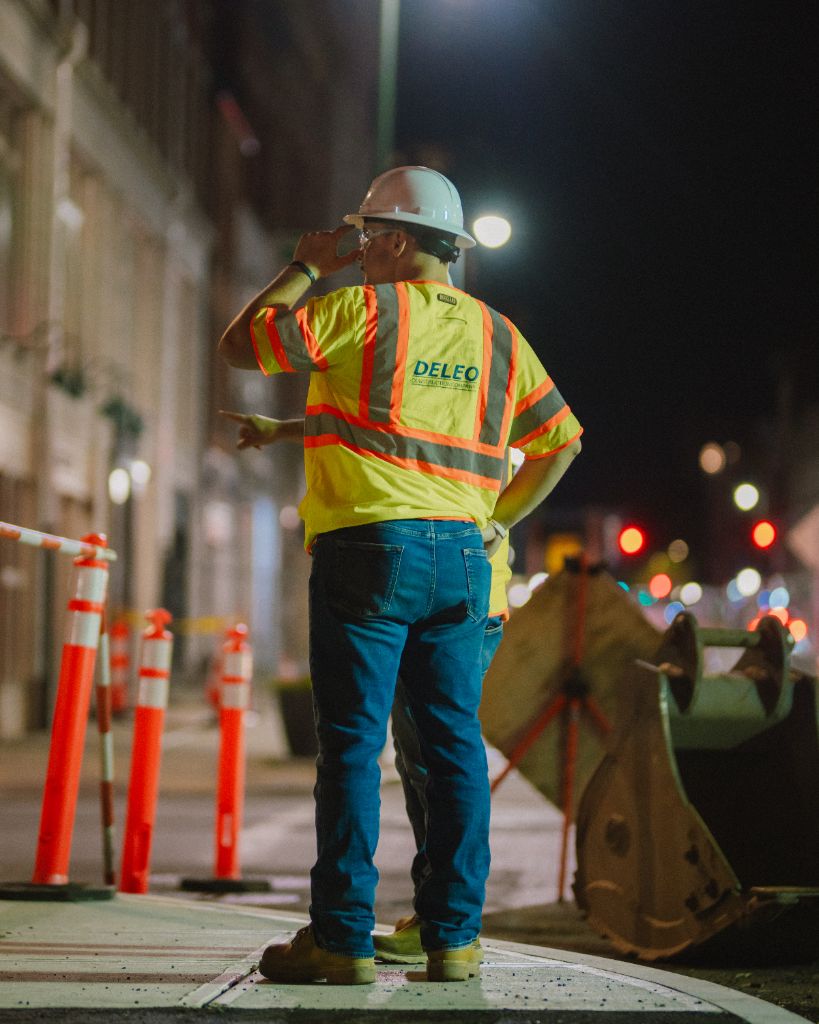
DeLeo underground utility crew at work
Core Capabilities

Technical Scope — What Gets Built and Where

Each scope describes what is constructed, the environment it is built in, and the operational constraints that shape execution. DeLeo self-performs all of these scopes with its own crews.

Underground Electrical Infrastructure

Concrete-encased ductbank systems form the conduit network through which distribution cables are routed underground. DeLeo installs ductbank from the design footprint through final encasement — excavating the trench corridor, placing and spacing conduit per utility specifications, installing spacers and tie-wire, pouring concrete encasement in lifts, and backfilling to grade. Work is performed within active utility corridors, often parallel to energized cable systems. Conduit routing, bend radii, and pull-point spacing are executed to utility standards to ensure cable installation and long-term accessibility.

  • Concrete-encased ductbank installation (single and multi-run)
  • Conduit placement, spacing, and routing per utility spec
  • Cable pathway construction for distribution circuits
  • Work in active utility corridors and energized-adjacent environments
  • Pavement and surface restoration upon completion
Contract Client: United Illuminating (Avangrid) — 5-Year Framework 2024–2029  |  Eversource Energy — CT, MA, RI

Utility Structures — Vaults, Manholes & Access Chambers

Electrical vaults and manholes are the subsurface nodes where cable is pulled, spliced, and transitioned between distribution segments. DeLeo installs both precast and cast-in-place structures to utility specifications — excavating the structure footprint, preparing the subgrade, setting precast elements or forming and pouring in-place concrete, and integrating the conduit entries, sump systems, and frame/cover assemblies. Structure placement must align with ductbank geometry and grade constraints while maintaining the pull distances and access clearances required for cable operations and future maintenance.

  • Precast vault and manhole installation to utility spec
  • Cast-in-place concrete structures for site-specific conditions
  • Conduit entry, sump, and frame/cover integration
  • Pull-point spacing and access clearance coordination
  • Subsurface dewatering and shoring as required
Used in: Underground distribution networks, grid reliability programs, substation tie-in sequences

Substation & System Integration

Ductbank and conduit systems terminate at substations — the point where underground distribution connects to the broader transmission and switching infrastructure. This is a restricted operating environment. The utility's protection engineers establish what equipment is approved, where it can operate, and at what minimum approach distances — before any crew enters the yard. DeLeo performs the trenching, ductbank tie-ins, and conduit entry work at substation boundaries under these controls. Lockout/tagout procedures, phased switching plans, and outage window coordination with utility dispatch are standard elements of execution — applied on every substation civil project without exception.

  • Conduit entry and ductbank tie-ins at substation perimeters
  • Trenching within active station yards under utility protection protocols
  • Coordination with utility protection engineers on sequencing and outage windows
  • Work adjacent to energized equipment under minimum-approach-distance protocols
  • Phased execution to maintain station uptime during construction
Environment: Active electrical substations, energized transmission and distribution yards, restricted-access utility sites

Heavy Civil for Energy Infrastructure

Substations, fuel terminals, pipeline sites, and industrial energy processing facilities require substantial civil scope before equipment installation can begin. DeLeo performs this civil work — site preparation, earthwork, structural concrete for equipment pads and transformer foundations, underground utility installation, access road and yard paving, storm drainage, oil-water separators, secondary containment, and vapor recovery infrastructure. For energy distribution and fuel storage operators, this scope includes environmental compliance-driven construction: secondary containment systems, tank farm concrete foundations, and drainage infrastructure engineered to prevent release. This is not generic grading — it is civil work tied to equipment footprints, load paths, and regulatory requirements that define the facility's operational life.

  • Site preparation and grading for substations and energy facilities
  • Structural concrete — equipment pads, transformer foundations, retaining walls
  • Underground utility installation within facility boundaries
  • Access road and yard paving construction
  • Storm drainage, oil-water separators, and facility drainage systems
  • Vapor recovery infrastructure and secondary containment civil scope
Facility types: Substations, fuel terminals, processing facilities, industrial energy sites · Market: CT, NY, NJ, MA, RI

Storm, Sewer & Utility Infrastructure

Storm drainage systems, sewer infrastructure, and underground utility components installed as part of site development, utility, and energy-sector projects. DeLeo performs the complete installation sequence — trench excavation, pipe installation in all soil conditions, structure placement and adjustment, manhole and catch basin setting, connection to existing systems, and surface restoration. This scope is typically integrated with broader civil and underground electrical utility projects rather than executed as standalone municipal programs.

  • Storm drainage system installation and tie-in
  • Sewer infrastructure construction and integration
  • Trenching, pipe installation, and structure placement
  • Catch basin and manhole setting and adjustment
  • Integration with site civil and underground utility systems
Context: Site development, utility project civil scope, energy facility drainage systems

Emergency Response — Underground Utility

Underground electrical infrastructure failures require immediate excavation, assessment, and restoration under time pressure and often adverse conditions. DeLeo maintains 24/7 emergency response capability for utility clients — crews are on-call and can mobilize rapidly to address cable failures, structure compromises, storm-related underground damage, and other urgent civil utility failures. Emergency work is executed under the same safety protocols as planned work: utility locates, protection coordination, proper shoring, and full compliance with energized-adjacent requirements. Speed does not override these controls.

  • 24/7 on-call crew availability for utility clients
  • Rapid mobilization for underground electrical failures
  • Storm-related underground infrastructure damage response
  • Emergency excavation, assessment, and restoration
  • Full safety protocol compliance — no shortcuts under time pressure
Available to: Investor-owned utility clients with active contracted relationships
Execution Approach

How DeLeo Executes in Active Utility Environments

Every ductbank run passes near energized cable. Every vault excavation opens a hole adjacent to live infrastructure. Every substation civil project operates within a protection zone that dictates approved equipment, approach distances, and work sequencing. Managing this without disrupting service is the baseline expectation on every IOU contract — not an exception condition.

DeLeo's foremen and field supervisors work directly with utility construction managers before and throughout execution. Utility locates are completed and verified before any trench opens. Protection engineers establish site-specific requirements before crews enter restricted zones. Sequencing is planned to maintain system continuity, and outage windows are coordinated with dispatch to minimize customer impact. These are standard operating procedures on every DeLeo project, not project-specific accommodations.

Pre-Construction Coordination

Scope review with utility construction management, utility locates, protection engineer consultation, sequencing documentation, traffic control permitting — completed before groundbreaking.

Energized-Environment Protocols

Crews trained in minimum approach distances, high-voltage proximity PPE requirements, and utility-specific protection procedures. No crew enters a restricted zone without a coordinated protection plan in place.

Phased Installation to Maintain Uptime

Planned cutover sequences, temporary routing, and phased ductbank installation allow distribution systems to remain operational while permanent infrastructure is installed, tied in, and brought online.

DeLeo underground utility excavation
Think Smart,
Think Safety
The Workforce

LIUNA Union-Affiliated Workforce

DeLeo's workforce is LIUNA-affiliated and trained to the requirements of IOU utility contracts — confined-space entry, trench shoring, energized-adjacent work protocols, lockout/tagout, and the utility-specific safety standards applied on United Illuminating and Eversource programs. These are not transferable from general civil construction. They are learned through training and sustained through consistent execution on utility projects.

On multi-year framework contracts, workforce consistency matters. Low turnover means foremen and operators who know the utility's standards and have established working relationships with utility construction managers are present throughout the contract term — not rotated in from other work. That continuity directly affects sequencing efficiency, protection plan coordination, and execution quality on every project in the program.

LIUNA-affiliated tradespeople — laborers and operating engineers
Confined-space entry and trench safety certified
Energized-adjacent work and high-voltage proximity training
OSHA 10 & 30 certified field supervision
Prevailing wage compliant on all applicable public projects
Consistent, low-turnover crews on long-term utility programs
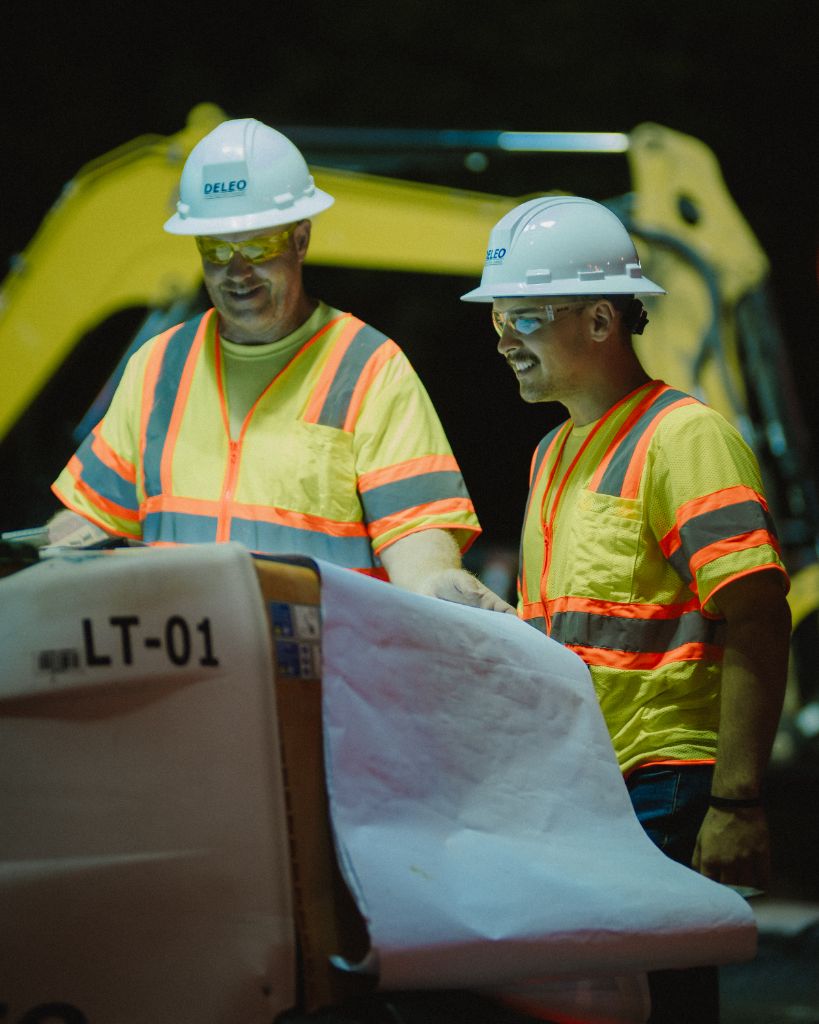
DeLeo LIUNA union crew
Discuss Your Project

Discuss Your Scope

If you are planning underground electrical work, substation civil scope, energy facility development, or utility infrastructure in the Northeast — contact DeLeo. Scope is reviewed directly, questions are practical, and proposals are based on what the work actually requires in the field.
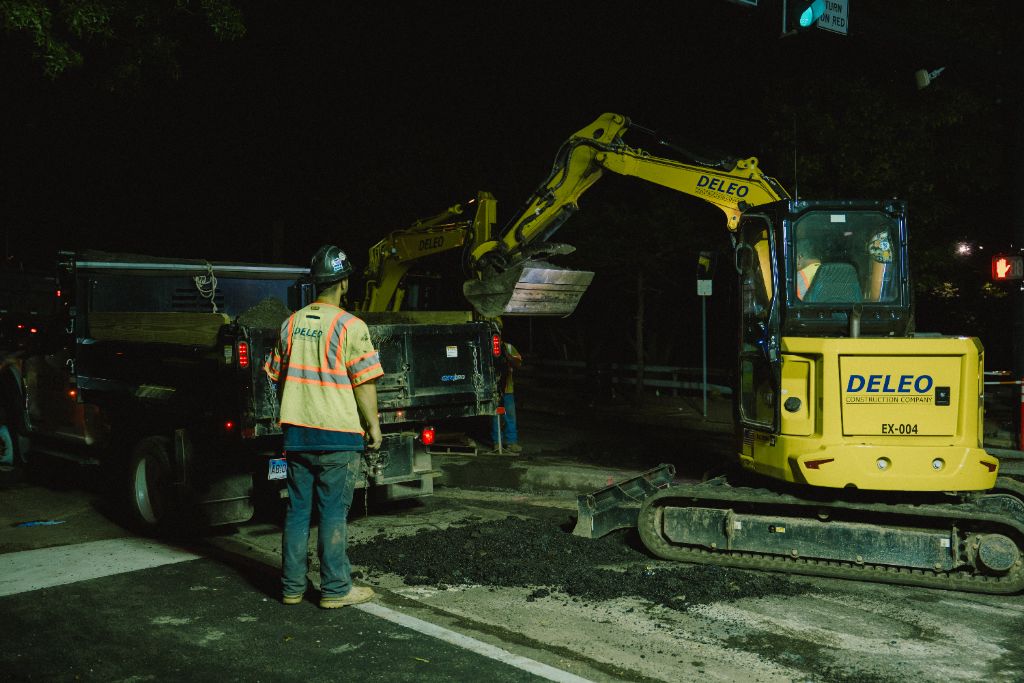
DeLeo construction site